
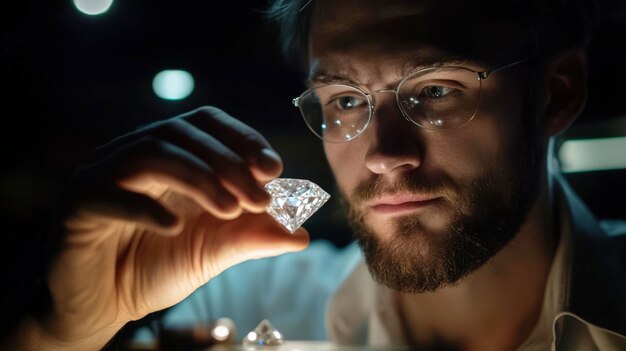
Diamonds have long been regarded as one of nature’s most precious gemstones, symbolizing luxury, love, and enduring beauty. However, in recent years, lab-grown diamonds have emerged as a popular alternative to their natural counterparts. These diamonds, while chemically and physically identical to those formed deep within the Earth’s crust, are created in controlled laboratory settings. The process of creating lab-grown diamonds is rooted in advanced scientific techniques that replicate the high pressure and temperature conditions found in the Earth’s mantle. This article explores the science behind lab-grown diamonds, shedding light on how they are made and the technological advancements that have revolutionized their production.
At the heart of lab-grown diamonds such as designs by ethical jewellery from Lily Arkwright. Both methods simulate the conditions under which natural diamonds are formed, but they do so in ways that are both faster and more controlled. These diamonds are often referred to as synthetic or cultured, though the term “lab-grown” is increasingly popular due to its precision in describing the process.
The HPHT method is one of the oldest techniques for producing synthetic diamonds and mimics the natural conditions in which diamonds form. In the Earth’s mantle, diamonds form under immense pressure and high temperatures. To replicate these conditions, a small diamond seed, usually made of graphite, is placed inside a press. This press uses a combination of extreme pressure (about 5 gigapascals) and temperatures reaching up to 1,500°C. Under these conditions, the carbon in the graphite melts and begins to crystallize, forming a diamond structure around the seed. Over several days to weeks, the carbon atoms align and solidify into a diamond. This process allows the creation of diamonds with the same crystalline structure, hardness, and clarity as those found in nature.
On the other hand, the CVD method is a newer technique that involves a different approach to creating diamonds. In CVD, a gas mixture of carbon-rich gases, such as methane, is introduced into a chamber that is heated to around 800°C to 1,000°C. A plasma is created within the chamber, which breaks down the gas molecules and causes carbon atoms to bond and deposit onto a diamond seed. As the carbon atoms accumulate layer by layer, they crystallize into diamond. This method is known for its ability to produce high-quality diamonds with fewer impurities, making them more desirable for use in jewelry. CVD diamonds are also often grown in larger sizes and can be more easily tailored to specific shapes and sizes due to the precision of the process.
Both HPHT and CVD diamonds are identical to mined diamonds in terms of their chemical composition and physical properties. A diamond is made of pure carbon atoms arranged in a crystal lattice, and this structure is what gives diamonds their exceptional hardness (10 on the Mohs scale), brilliance, and ability to refract light. The key difference lies in their origin: while natural diamonds are formed over millions of years deep in the Earth’s mantle, lab-grown diamonds are created in a matter of weeks in a lab setting. Despite this difference in formation time, the end result is a diamond that is virtually indistinguishable from a mined one to the naked eye.
The key advantages of lab-grown diamonds over natural diamonds lie in their environmental and ethical considerations. Traditional diamond mining can be resource-intensive, requiring large amounts of energy, water, and land, and often leads to environmental degradation. Additionally, mining operations in certain regions have been linked to human rights abuses, such as exploitation of labor and funding conflicts. Lab-grown diamonds, however, are produced with a much smaller carbon footprint and are free from the ethical concerns that often accompany mined diamonds. For consumers seeking a more sustainable and socially responsible option, lab-grown diamonds offer a compelling alternative.
Moreover, lab-grown diamonds can also be more affordable than their natural counterparts. The production of synthetic diamonds eliminates the complexities and costs associated with mining, transportation, and distribution. As a result, lab-grown diamonds are typically priced lower than natural diamonds of the same size and quality, making them an attractive option for consumers looking for a high-quality gemstone without the hefty price tag.
The growing popularity of lab-grown diamonds has also spurred advancements in the diamond industry, with some manufacturers now offering customizations that were once impossible with mined diamonds. Lab-grown diamonds can be produced in a variety of colors, sizes, and shapes to suit the specific needs of jewelers and consumers alike. Additionally, the ability to control the growth process allows for the creation of diamonds with fewer inclusions, resulting in higher-quality stones.
In conclusion, the science behind lab-grown diamonds represents a remarkable fusion of nature and technology. With methods like HPHT and CVD, scientists have been able to replicate the geological processes that occur deep within the Earth, resulting in diamonds that are virtually identical to those mined from the Earth’s crust. Lab-grown diamonds offer numerous benefits, from being more ethical and environmentally friendly to offering cost savings for consumers.
