
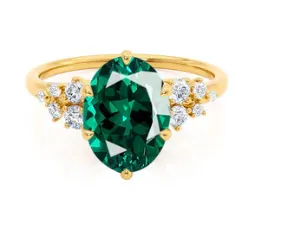
Emerald rings have an unmistakable presence. Their rich green colour feels both historic and contemporary, while subtle changes in cut, setting and metal can completely alter the character of the finished piece. A streamlined solitaire may appear modern and architectural; the same gemstone surrounded by a diamond halo can feel romantic and opulent.
Exploring emerald rings by Lily Arkwright reveals how these individual design decisions work together. Rather than allowing colour alone to define the ring, carefully considered proportions, stone shapes and setting styles determine whether the result feels understated, dramatic, vintage-inspired or distinctly modern.
Stone Shape Sets the Visual Direction
The centre stone’s shape is often the first detail the eye notices. An oval lab-grown emerald creates a soft, elongated silhouette that can make the finger appear more slender. Its curved outline also suits buyers who want a classic design without the formality of sharper geometric cuts.
Emerald-cut stones offer a different effect. Their straight edges, clipped corners and broad facets create a composed, architectural appearance. This shape places emphasis on depth of colour and symmetry rather than intense sparkle, making it particularly appealing to those drawn to clean, confident design.
Cushion cuts balance structure with softness. Rounded corners give them a romantic quality, while their broader outline can make the centre stone feel substantial. Pear-shaped emeralds introduce asymmetry and movement, offering a more individual look that remains elegant.
Carat weight matters, but visible dimensions matter just as much. Someone may prefer a two-carat stone not simply because it is larger, but because its proportions allow the green colour to become the clear focal point. Conversely, a more restrained centre stone may better suit an active lifestyle or a preference for discreet luxury.
The Setting Controls Light, Scale and Character
A solitaire setting gives the emerald room to command attention. With fewer surrounding details, the precision of the stone’s shape and the intensity of its colour become especially important. Fine prongs can create a light, delicate appearance, while a bezel setting frames the gemstone with metal for a smoother and more contemporary profile.
Halo settings increase the ring’s visual scale without relying solely on a larger centre stone. A border of smaller stones adds contrast and brightness, making the emerald appear more vivid. Hidden halos take a quieter approach: the additional detail is positioned beneath the centre stone, offering sparkle from the side while preserving a clean face-up view.
Three-stone or trilogy designs create greater width across the finger. Side stones can soften an angular emerald cut, emphasise the length of an oval or introduce contrast through different shapes. This style often feels more elaborate than a solitaire, yet less ornate than a full halo.
Metal Choice Changes the Tone of the Green
Platinum and white gold create a crisp setting around a lab-grown emerald. Their cool colour provides strong contrast, helping the green appear sharp, saturated and contemporary. They also coordinate naturally with colourless accent stones.
Yellow gold produces a warmer result. Its richness complements the gemstone’s natural depth and can give even a minimalist setting a more traditional or vintage-informed character. Rose gold offers a softer contrast, bringing warmth without the stronger classicism associated with yellow gold.
Band design also affects the overall impression. A plain, slender band keeps the centre stone visually dominant. Pavé-set shoulders add brilliance and formality, while a wider band creates a bolder, more grounded silhouette. The most successful choice is not necessarily the most decorative one, but the one that keeps the proportions of the stone, setting and band in balance.
Final Thought
The beauty of a lab-grown emerald ring lies in more than its distinctive colour. Shape determines its visual personality, the setting influences its scale and light, and the metal establishes warmth or contrast. Considering these elements together makes it easier to choose a ring that feels coherent and personal—whether the preferred look is quietly refined, romantically detailed or unapologetically bold.
